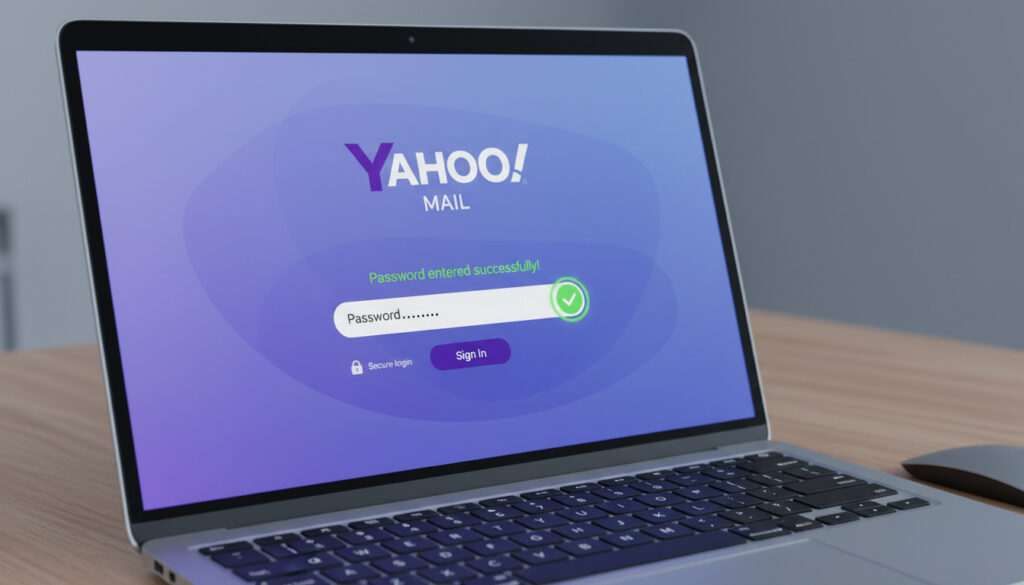
Yahoo Mail Sign In With Password Only – When It Works
Accessing Yahoo Mail with just a password remains possible under specific technical conditions. When two-factor authentication is disabled and login attempts originate from familiar devices or networks, Yahoo’s security systems may permit direct password entry without additional verification codes.
Understanding the distinction between web-based authentication and third-party app access proves essential for users seeking streamlined login experiences. Yahoo’s security architecture prioritizes account protection, implementing additional verification layers for unrecognized access attempts while offering specialized app passwords for email clients.
The login process, recovery mechanisms, and limitations surrounding password-only access reflect Yahoo’s default security posture established since 2013. These protocols create specific scenarios where pure password authentication succeeds and common situations where it fails.
Key Conditions for Password-Only Access
Successful password-only authentication depends on several trust factors. The system evaluates device fingerprints, IP addresses, and geographic locations against historical login patterns. When the platform recognizes consistent access signatures, it may waive secondary verification requirements for accounts without two-factor authentication enabled.
Conversely, attempts from new browsers, different Wi-Fi networks, or travel locations typically trigger two-factor authentication challenges regardless of password accuracy. These protective measures prevent unauthorized access even when credentials become compromised.
Security Architecture Insights
Yahoo employs risk-based authentication algorithms that continuously assess threat levels. The platform distinguishes between routine access from known environments and potentially suspicious activities requiring additional scrutiny. This dynamic approach balances user convenience with protective barriers.
Third-party email applications operate under different protocols than web browsers. Rather than standard account passwords, these clients require application-specific passwords generated through Yahoo’s security settings. This segmentation isolates external access points from primary account credentials.
Access Scenario Comparison
| Access Method | Authentication Requirements | Typical Triggers |
|---|---|---|
| Web Browser (Trusted) | Password only | Recognized device, home network, 2FA disabled |
| Web Browser (New Location) | Password + Verification code | New IP address, different city, updated browser |
| Mobile App | Password or biometric | Previously authorized device, saved credentials |
| Desktop Email Client | App password | Outlook, Thunderbird, Apple Mail configurations |
Standard Login Process
Standard Yahoo Mail access begins at mail.yahoo.com, where users enter their email address and password. Password-only authentication succeeds primarily when no 2FA is configured and the system recognizes the device, location, or network through previous successful logins.
The platform’s security algorithms evaluate each authentication attempt based on familiarity. New devices, different Wi-Fi networks, or geographic locations typically trigger verification code requests regardless of password accuracy. Users encountering these prompts may select the security settings to manage verification preferences.
Evolution of Authentication Protocols
Since 2013, Yahoo has progressively strengthened default security settings following industry-wide recognition of credential-based vulnerabilities. The shift toward mandatory verification for unrecognized access attempts reflects broader trends in email platform protection. These changes significantly reduced successful phishing and unauthorized access incidents while introducing friction for legitimate users accessing accounts from new locations.
Limitations and Recovery Mechanisms
Password-only access fails when security questions remain unanswered, recovery email addresses expire, or phone numbers become disconnected. Account recovery then requires extended verification processes involving government identification or historical account data verification. Maintaining current recovery information proves essential for regaining access during travel or device replacements.
Security and Convenience Analysis
The tension between seamless access and robust protection shapes Yahoo’s current implementation. Users prioritizing convenience must accept reduced security postures, while those handling sensitive communications benefit from persistent verification requirements. Neither approach universally suits all use cases, necessitating informed decisions about security configuration.
Expert Perspective
Authentication systems must thread the needle between fortress-like security and practical accessibility. Yahoo’s implementation recognizes that the same user exhibits different risk profiles when logging in from their home office versus an airport lounge.
Summary
Password-only Yahoo Mail access functions exclusively within narrow parameters: disabled two-factor authentication, recognized devices, and familiar network environments. Deviation from these conditions automatically invokes additional verification layers designed to prevent unauthorized entry. Understanding these boundaries helps users anticipate authentication requirements and maintain appropriate recovery options for seamless access.
Frequently Asked Questions
How do I sign into Yahoo Mail with just my password?
Navigate to mail.yahoo.com and enter your credentials. Password-only entry succeeds when two-factor authentication is disabled and Yahoo recognizes your device or network from previous sessions.
Why does Yahoo ask for a verification code even with the correct password?
Unrecognized devices, new locations, or different IP addresses trigger additional security layers. This occurs when the system cannot match your current access patterns against historical login data, regardless of password accuracy.
Can I disable two-factor authentication to use only a password?
While possible, disabling 2FA significantly reduces account security. The option remains available in account security settings for users who understand and accept the associated risks.
What is an app password and when do I need one?
App passwords replace your standard password for third-party email clients like Outlook or Apple Mail. These specialized credentials provide secure access without exposing your primary account password to external applications.
More related posts
 Cynthia Woods Mitchell Pavilion: Capacity, Events, Seating & Info
 Thank You for Your Service – Meaning, Origin, Veteran Views
 WYD Meaning in Text: What It Stands For and How to Use It
 Funny Story Spice Level: Emily Henry’s Romance Rating
 What Is Half of 3/4 Cup? 6 Tablespoons Exactly
 Star Wars in Order: The Complete Viewing Guide (2026)
 Love Island Season 3: Cast, Winner, and Cultural Impact
 New Movies to Rent: Top Picks, Release Dates & Prices (2026)