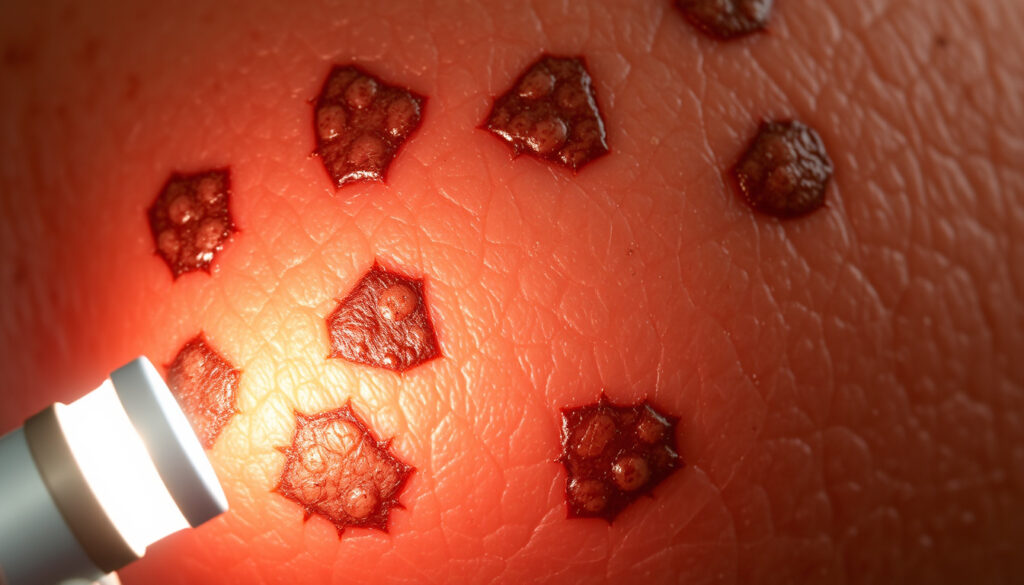
Signs of Skin Cancer – ABCDE Rule and Early Detection Guide
Skin cancer affects millions of people each year, yet early detection dramatically improves treatment outcomes. Understanding the signs of skin cancer can mean the difference between a minor procedure and more extensive intervention. The most effective approach combines knowing what to look for on your skin and understanding when professional evaluation becomes necessary.
Healthcare professionals emphasize that regular self-examination paired with awareness of warning signs offers the best defense against advanced skin cancer. While some marks may appear concerning, many are harmless—however, recognizing patterns associated with malignancy requires specific knowledge that this guide provides.
The three primary types of skin cancer—melanoma, basal cell carcinoma, and squamous cell carcinoma—each present distinct characteristics. Melanoma, though less common, represents the most serious form and demands particular attention. Early identification remains the cornerstone of successful treatment across all types.
What Are the Main Signs of Skin Cancer?
Recognizing the main signs of skin cancer involves understanding both general warning signals and type-specific symptoms. Early signs typically manifest on sun-exposed areas of the body, though any skin region may develop cancerous changes.
Most suspicious lesions share common characteristics: asymmetry, irregular borders, multiple colors, and changes over time. Any spot exhibiting one or more of these features warrants professional evaluation.
Overview Grid: Warning Signs by Category
- Asymmetry in shape — One half differs from the other when divided by an imaginary line
- Irregular borders — Edges that appear ragged, notched, blurred, or scalloped
- Varied colors — Multiple shades within a single lesion, including black, brown, tan, red, blue, or white
- Large diameter — Lesions exceeding 6 millimeters (roughly the size of a pencil eraser), though smaller suspicious spots require attention
Essential Insights for Detection
- Skin cancer ranks as the most common cancer in the United States, with millions diagnosed annually
- Melanoma accounts for only about 1% of skin cancer cases but causes the majority of deaths
- Early-stage melanoma shows a 99% five-year survival rate when detected promptly
- Basal and squamous cell carcinomas, while more prevalent, generally respond well to treatment when identified early
- The “ugly duckling” sign—any lesion that looks different from your other moles—deserves particular attention
- Monthly self-examinations significantly increase the likelihood of catching abnormalities at treatable stages
| Category | Key Fact | Clinical Detail |
|---|---|---|
| Prevalence | Most common cancer | Over 5 million cases treated annually in the US |
| Deadliest form | Melanoma | Curable in early stages with >99% survival |
| Primary risk factor | UV exposure | Sunlight and tanning beds significantly increase risk |
| Prevention | Sunscreen use | Broad-spectrum SPF 30+ recommended daily |
| Self-examination | Monthly checks | Photograph suspicious areas for tracking changes |
| Professional screening | Annual visits | Earlier and more frequent for high-risk individuals |
What Does Skin Cancer Look Like? Visual Guide
Understanding what skin cancer looks like requires examining both the visual characteristics and behavioral patterns of suspicious lesions. While photographs can illustrate common presentations, individual cases vary considerably.
Healthcare providers categorize skin cancer signs into general warnings applicable to all types and specific indicators associated with particular forms. This distinction helps individuals assess their own skin with greater confidence.
General Warning Signs Across All Types
Several symptoms warrant attention regardless of which skin cancer type may be present. These include new growths appearing on the skin, changes to existing moles or spots, and sores that fail to heal within several weeks. Persistent redness or irritation in a localized area also merits examination, as does any spot that simply looks different from others on your body.
Sensations such as itching, tenderness, or bleeding from a lesion without apparent cause should prompt further investigation. Changes in size, shape, color, or texture over any time period represent particularly important warning signals.
Distinguishing Benign from Suspicious Lesions
Not every unusual spot indicates skin cancer. Benign moles typically maintain uniform color and smooth, well-defined borders. They usually remain relatively unchanged over time. In contrast, lesions displaying asymmetry, multiple colors, irregular borders, or progressive changes warrant professional evaluation.
The American Academy of Dermatology recommends comparing any suspicious spot against your other moles. Lesions commonly referred to as “ugly ducklings”—those standing out from your personal mole pattern—deserve particular scrutiny.
ABCDE Rule: Key Signs of Melanoma
The ABCDE rule provides a systematic framework for identifying potentially malignant moles, particularly melanoma. Endorsed by the American Academy of Dermatology, this method empowers individuals to conduct meaningful self-examinations.
Dermatologists recommend performing head-to-toe skin checks monthly, documenting any suspicious areas with photographs for future comparison. Any lesion matching one or more ABCDE criteria should prompt a professional evaluation.
Breaking Down the ABCDE Criteria
| Letter | Description | Warning Signs |
|---|---|---|
| A: Asymmetry | One half does not match the other in shape, size, or thickness | Uneven halves when divided by an imaginary line |
| B: Border | Edges are irregular, jagged, notched, scalloped, blurred, or poorly defined | Borders fading into surrounding skin |
| C: Color | Varying shades within the spot | Black, brown, tan, red, blue, white; uneven color distribution |
| D: Diameter | Typically larger than 6mm (pencil eraser size) | Any growing spot, regardless of exact size |
| E: Evolving | Changes over time; considered the most critical sign | Shifts in size, shape, color, elevation, texture; new symptoms like itching, bleeding, or crusting |
Melanoma specifically arises from melanocytes, the pigment-producing cells in the skin. This cancer often appears as a new spot or a changing mole. Visual descriptions from dermatology sources characterize melanoma as asymmetrical moles with irregular borders, multiple colors such as black, red, and blue patches, diameters exceeding 6mm, and evolving features like elevation or bleeding.
Signs of Melanoma on Different Body Areas
Melanoma can develop anywhere on the body, though certain locations show higher prevalence. In men, the back and torso represent common sites. Women frequently develop melanoma on the legs. Both sexes may see facial involvement, particularly around the nose and cheeks.
Early signs of skin cancer on the arm often manifest as spots along the upper arms and shoulders, areas frequently exposed during outdoor activities. The backs of hands and forearms receive substantial sun exposure and warrant regular inspection during self-examinations.
If any spot matches one or more ABCDE features, or if a lesion simply feels “off,” consult a dermatologist promptly. Early professional assessment provides peace of mind and enables treatment to begin at the earliest possible stage.
Signs of Non-Melanoma Skin Cancers
Non-melanoma skin cancers—primarily basal cell carcinoma and squamous cell carcinoma—account for the majority of skin cancer diagnoses. While generally less aggressive than melanoma, these cancers still require timely treatment to prevent local tissue damage and disfigurement.
Basal Cell Carcinoma Characteristics
Basal cell carcinoma represents the most frequently diagnosed form of skin cancer. This cancer typically develops on sun-exposed areas such as the face, ears, neck, scalp, shoulders, and back.
The Signs of Skin Cancer: Early Detection Warning Signs and Symptoms resource describes basal cell carcinoma as frequently presenting as a pearly bump, shiny nodule, or non-healing sore. Visual descriptions include translucent pearly nodules with visible blood vessels and ulcers that fail to heal despite treatment attempts.
Common presentations include:
- Pearly or waxy bump on the skin surface
- Sore that bleeds, crusts, or doesn’t heal completely
- Flat, scar-like patch with poorly defined borders
- Pinkish growth with slight central depression
Squamous Cell Carcinoma Indicators
Squamous cell carcinoma ranks as the second most common skin cancer type. This cancer also favors sun-exposed regions but may develop in other locations including mucous membranes.
Typical squamous cell carcinoma signs include a scaly red patch, firm red nodule, or persistent open sore. The American Academy of Dermatology notes that wart-like growths, open sores with raised edges, and elevated areas with central depression all warrant professional evaluation.
Non-melanoma skin cancer symptoms generally involve:
- Rough or scaly skin patches that may bleed when scraped
- Firm red nodules beneath the skin surface
- Open sores that persist for weeks without healing
- Raised growths with visible blood vessels
When to See a Doctor for Potential Skin Cancer
Determining when professional evaluation becomes necessary empowers individuals to seek appropriate care without unnecessary anxiety or dangerous delays. Several scenarios warrant contacting a dermatologist or primary care provider.
Any spot matching ABCDE criteria, lesions that appear suddenly or change rapidly, non-healing sores persisting beyond three weeks, and any growth causing discomfort, bleeding, or cosmetic concern should prompt a dermatology appointment.
Red Flags Requiring Prompt Attention
Certain signs suggest higher urgency for medical evaluation. Sores that bleed repeatedly without clear cause, rapidly growing lesions, spots with significant color variation, and any mole significantly different from your others all merit professional assessment.
Individuals with elevated risk profiles should maintain particularly vigilant surveillance. High-risk factors include substantial cumulative sun exposure, history of tanning bed use, fair skin that burns easily, numerous existing moles, family history of skin cancer, and previous personal history of skin cancer or significant sunburns.
Are All Changing Moles Skin Cancer?
Not all changing moles indicate skin cancer. Moles naturally evolve throughout life, and many changes remain benign. Hormonal shifts during adolescence, pregnancy, or menopause can alter mole appearance without malignancy.
However, How to Spot the Early Warning Signs of Skin Cancer guidance emphasizes that any evolving lesion should receive professional attention. Distinguishing between normal mole changes and concerning alterations requires dermatological expertise.
Reassuring signs that may indicate benign change include:
- Gradual, symmetrical alterations over many years
- Uniform color distribution despite slight darkening
- Smooth, regular borders maintained throughout changes
- No new symptoms such as itching, tenderness, or bleeding
Risk Factors and Prevention Context
Understanding risk factors helps individuals assess their personal vulnerability and adjust prevention strategies accordingly. Both environmental exposures and intrinsic characteristics influence skin cancer development.
Who Faces Higher Risk?
UV exposure from sunlight and artificial sources like tanning beds represents the most significant modifiable risk factor. Fair-skinned individuals with blonde or red hair, light eyes, and a tendency to sunburn easily face elevated baseline risk. Those with numerous moles—particularly atypical or dysplastic moles—require heightened vigilance.
Family history of skin cancer increases personal susceptibility, as does personal history of previous skin cancers or significant blistering sunburns during childhood. Immunosuppressed individuals, including organ transplant recipients, face meaningfully elevated risk levels.
Prevention Strategies
Effective prevention combines sun avoidance behaviors with regular surveillance. Seeking shade during peak sun hours, wearing protective clothing including wide-brimmed hats and sunglasses, and applying broad-spectrum sunscreen with SPF 30 or higher daily form the foundation of prevention.
Avoiding indoor tanning entirely eliminates a significant risk factor, particularly important for young adults. Monthly self-examinations complement annual professional skin checks, creating a comprehensive surveillance approach. For at-risk populations, dermatologists may recommend more frequent professional evaluations.
Professional Diagnosis and Next Steps
Professional skin cancer diagnosis involves visual examination followed potentially by biopsy of suspicious lesions. Dermatologists receive specialized training in identifying characteristics that distinguish benign lesions from malignant ones.
During a skin examination, providers assess the overall skin landscape while paying particular attention to any concerning spots. The Centers for Disease Control and Prevention emphasizes that early detection through professional screening significantly improves treatment outcomes.
If a biopsy confirms skin cancer, treatment options vary based on cancer type, location, and stage. Early-stage basal and squamous cell carcinomas often respond well to minor surgical procedures. Melanoma treatment may involve wider excision, sentinel lymph node evaluation, and potentially immunotherapy or targeted therapy for more advanced cases.
Understanding Certainty and Uncertainty
Knowledge of what medical science has established regarding skin cancer signs coexists with recognition of remaining uncertainties. This balanced perspective supports informed decision-making without promoting either unnecessary alarm or false reassurance.
- ABCDE criteria reliably identify suspicious melanocytic lesions
- Early detection substantially improves survival rates
- UV exposure drives most skin cancer development
- Self-examination and professional screening complement each other
- Non-melanoma skin cancers rarely metastasize when treated early
- Individual lesion behavior cannot be predicted with absolute certainty
- Some aggressive melanomas may not display classic ABCDE features
- Optimal screening frequency for average-risk individuals varies by expert opinion
- Role of genetics versus environment in individual cases may remain unclear
Authoritative Sources for Further Information
Several organizations provide reliable, up-to-date information on skin cancer signs, prevention, and treatment. The Skin Cancer Foundation offers comprehensive resources including prevention guidelines and screening recommendations. Their guidance aligns with the ABCDE framework for mole identification.
Monthly reporting of changes is essential. Any new or changing lesion should be brought to a dermatologist’s attention promptly.
— Skin Cancer Foundation Prevention Guidelines
The Mayo Clinic provides detailed symptom descriptions that complement professional medical evaluation. The National Cancer Institute’s Moles to Melanoma calculator offers an interactive tool for understanding ABCDE features.
Summary and Action Steps
Recognizing the signs of skin cancer involves combining systematic self-examination with awareness of warning signals. The ABCDE framework—Asymmetry, Border irregularity, Color variation, large Diameter, and Evolving changes—provides reliable criteria for identifying potentially malignant lesions.
Non-melanoma skin cancers present their own distinct characteristics, with basal cell carcinoma typically appearing as pearly bumps or non-healing sores while squamous cell carcinoma often manifests as scaly patches or firm nodules. Any persistent skin change warrants professional evaluation.
Monthly self-checks, annual professional examinations, and daily sun protection collectively form an effective prevention strategy. When concerning signs appear, prompt dermatology consultation ensures early diagnosis and optimal treatment outcomes.
Frequently Asked Questions
What is the ABCDE rule for skin cancer?
The ABCDE rule provides five criteria for identifying suspicious moles: Asymmetry (one half doesn’t match the other), Border irregularity, Color variation, Diameter larger than 6mm, and Evolving changes over time. Any lesion meeting one or more criteria warrants professional evaluation.
Are all changing moles skin cancer?
No, not all changing moles indicate skin cancer. Moles naturally evolve throughout life due to hormonal changes, sun exposure, and aging. However, any evolving lesion should receive professional evaluation to rule out malignancy.
What does basal cell skin cancer look like?
Basal cell carcinoma typically appears as a pearly or waxy bump, shiny nodule, or non-healing sore. Some present as flat, scar-like patches with poorly defined borders. These lesions frequently develop visible blood vessels.
When should I see a doctor for a skin spot?
Consult a dermatologist for any spot matching ABCDE criteria, non-healing sores persisting beyond several weeks, rapidly growing lesions, spots causing discomfort or bleeding, or any mole significantly different from your others.
What are the first signs of skin cancer on the arm?
Early signs on the arm include new growths, changing moles, persistent redness, scaly patches, or any lesion that bleeds without clear cause. Upper arms and forearms warrant particular attention during self-examinations.
How often should I perform skin self-exams?
Dermatologists recommend monthly full-body self-examinations. Photograph any suspicious areas to track changes over time. Annual professional skin exams complement self-checks, with more frequent evaluations for high-risk individuals.
What does squamous cell carcinoma look like?
Squamous cell carcinoma often appears as a scaly red patch, firm red nodule, wart-like growth, or open sore with raised edges. Some lesions show central depression with elevated borders.
Can skin cancer be cured if caught early?
Yes, early-stage skin cancer generally responds well to treatment. Melanoma shows a 99% five-year survival rate when detected at early stages. Basal and squamous cell carcinomas have excellent cure rates with prompt treatment.
More related posts
 What Is Imposter Syndrome – Symptoms, Causes & How to Overcome It
 Sarah Michelle Gellar Movies and TV Shows Complete Guide
 Friday the 13th Movies in Order: Complete Chronological Guide
 How to Create a QR Code: Free Step-by-Step Guide (2025)
 Best Life Insurance Companies Ireland: Top 2024 Picks
 America the Beautiful Pass: Costs, Coverage & How to Buy
 Jett Puckett Net Worth: $5 Million in 2025
 Kylie Jenner Met Gala 2026: Dress, Mishap, Chalamet Absent