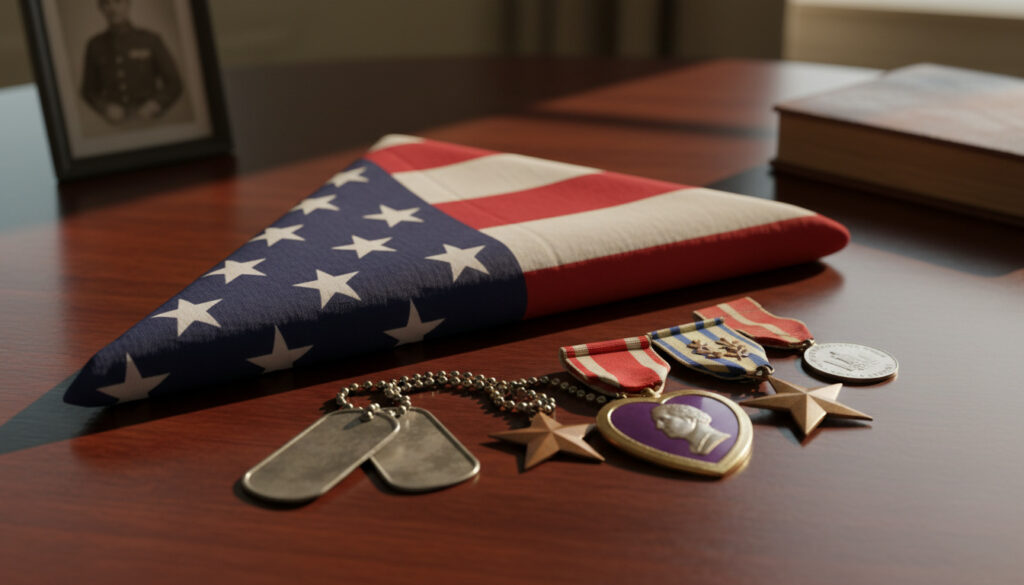
Thank You for Your Service – Meaning, Origin, Veteran Views
The phrase “thank you for your service” has become an inescapable feature of American public life, offered spontaneously to veterans at airports, restaurants, and shopping centers across the country. What began as a genuine expression of post-9/11 gratitude has evolved into a complex social ritual that generates significant debate among those it intends to honor. While civilians often view the statement as a respectful acknowledgment of sacrifice, many veterans experience it as an awkward obligation or hollow platitude.
Surveys conducted by veteran organizations reveal that between 47% and 70% of former service members feel uncomfortable when receiving this recognition, describing it as everything from well-intentioned but shallow to actively triggering. The disconnect between civilian intent and veteran reception highlights deeper questions about how American society processes military service and trauma in an era of distant, protracted conflicts.
Understanding the phrase requires examining its origins in the Global War on Terrorism, its distinction from the hostility faced by Vietnam veterans, and the specific reasons why a statement of gratitude might engender resentment. The conversation extends beyond semantics into issues of civilian-military divides, American exceptionalism, and the search for authentic connection across profound experiential gaps.
What Does ‘Thank You for Your Service’ Mean?
Expression of civilian gratitude toward U.S. military veterans and service members
Spontaneous public encounters, Veterans Day ceremonies, airport announcements
Marked departure from Vietnam-era disdain toward institutional appreciation
Divisive social ritual—appreciated by some, resented by others
- Awkward majority: Between 47% and 70% of veterans report feeling uncomfortable when hearing the phrase, according to surveys by USAA and the Cohen Veterans Network.
- Post-9/11 emergence: The expression achieved widespread usage specifically during the Global War on Terrorism, replacing earlier, less standardized forms of acknowledgment.
- Shorthand complexity: It functions as a verbal shortcut for civilians to process complex feelings about military sacrifice without engaging in deeper conversation.
- Institutional saturation: The phrase appears in airport public address systems, corporate marketing campaigns, and television programming like Curb Your Enthusiasm.
- Generational divide: Post-9/11 veterans report higher rates of discomfort than earlier generations, possibly due to the phrase’s association with controversial conflicts.
- First responder extension: By analogy, similar expressions extend to police and firefighters, though the critique of superficiality applies equally.
| Attribute | Details |
|---|---|
| Primary Meaning | Civilian acknowledgment of military service |
| Era of Origin | Early 2000s (post-9/11) |
| Common Abbreviation | TYFYS (often used sarcastically) |
| Veteran Discomfort Rate | 47-70% feel awkward or uneasy |
| Key Media Reference | Curb Your Enthusiasm episode depicting veteran demanding the phrase |
| Historical Contrast | Opposite of Vietnam-era hostility |
| Primary Critique | Perceived as shallow or obligatory |
| Suggested Alternative | “What did you do in the military?” |
Where Did ‘Thank You for Your Service’ Come From?
The phrase emerged as a widespread expression of civilian gratitude during the post-9/11 era, specifically amid the Global War on Terrorism. Military culture reporting documents how it became the default shorthand for appreciation during the 2000s, ingrained through veterans sarcastically abbreviating it as “TYFYS” and media portrayals depicting the phrase as social currency.
Airport public announcements, corporate marketing campaigns, and spontaneous civilian encounters transformed the statement from occasional courtesy to near-universal response upon spotting military identifiers like hats or uniforms. Veteran advocacy organizations contrast this sharply with the Vietnam era, where service members frequently encountered disdain rather than gratitude.
The Vietnam War created a chasm between military and civilian experiences, with returning service members facing blame or indifference. The post-9/11 phrase represents not just linguistic evolution but a calculated societal reversal of that dynamic—though veterans note the new approach brings its own form of alienation.
Cultural artifacts solidified the phrase’s entrenchment. A Curb Your Enthusiasm scene depicts a veteran demanding the acknowledgment at a dinner party, illustrating how the expression became simultaneously mandatory and mocked. This duality—earnest gratitude and cynical performance—defines its contested status today.
Is ‘Thank You for Your Service’ Offensive to Veterans?
While no widespread hatred exists for the phrase, it generates significant division among those who served. Surveys and interviews indicate that nearly half to two-thirds of veterans experience discomfort when hearing the expression, ranging from mild awkwardness to active distress. The offense lies not in the sentiment but in the mechanical nature of its delivery and the social dynamics it creates.
Why It Creates Awkwardness
Trauma professionals note that the phrase demands a response, shifting focus to the veteran’s obligation to assuage the civilian’s feelings. This transactional dynamic forces service members into the position of comforting the thanker, often leaving them managing the emotional labor of the interaction. The moment becomes about the civilian’s need to express gratitude rather than the veteran’s actual experience.
The Shallowness Problem
Overuse has rendered the expression a clichéd, politically correct platitude rather than genuine interest. The statement functions as a “check-the-box” exercise allowing civilians to discharge their duty of acknowledgment without deeper engagement. It treats all military experiences as identical, ignoring the vast differences between administrative roles and combat deployments, between voluntary service and drafted conscription.
For veterans who carry trauma from controversial conflicts like Iraq or Afghanistan, or who harbor complex feelings about their service, the phrase can activate painful memories. Those not proud of their experiences may find the thank-you reflexively painful, as it presumes uniformly positive sentiment about military actions.
Reception varies dramatically by individual. Some veterans appreciate the recognition, particularly those from earlier generations who remember worse treatment. Cultural analysis suggests others view it as distinctly American exceptionalism or glib performance. Context matters: a rushed airport encounter differs significantly from a genuine conversation.
What Are Better Alternatives to ‘Thank You for Your Service’?
Veterans and military researchers consistently recommend replacing the reflexive phrase with meaningful engagement. Rather than offering blanket gratitude, civilians might ask specific questions about the veteran’s experience or current needs. Representative Dan Crenshaw has suggested “Never forget” as an alternative, implying shared national commitment rather than personal gratitude.
Military etiquette guides recommend asking “What did you do in the military?” or “How can I support your transition?” These questions acknowledge the person rather than the uniform. Inquiring about current civilian life—”What are you doing now? School? Work?”—or offering practical assistance often proves more valuable than verbal formulas.
| Common Approach | Veteran Critique | Suggested Alternative |
|---|---|---|
| “Thank you for your service” | Feels canned, triggering, or obligatory | “What was your role?” or “How can I help?” |
| Airport PA announcements | Broad and impersonal | Personalized questions about experiences |
| Generic social media posts | Performs gratitude without substance | Direct outreach to known veterans |
Application to First Responders
The critique extends by analogy to first responders including police officers and firefighters. Similar platitudes risk reducing complex professional experiences to simplistic soundbites. Etiquette advice emphasizes personalization over formulas: recognition of specific sacrifices like missed family milestones or lost autonomy proves more meaningful than blanket thanks.
How Has the Phrase Evolved Over Time?
-
For a deeper understanding of how this phrase has evolved, you can explore veteraner och det gröna ljuset.
Rare usage; minimal cultural presence. Veterans encountered sporadic thanks without institutionalized ritual.
-
Post-9/11 surge establishes phrase as default response. Airport announcements, corporate campaigns, and media embed the expression in daily life.
-
Veteran discomfort becomes public discourse. Satirical memes (TYFYS) emerge. Media critiques the obligation. Surveys document 47-70% awkwardness rates.
-
Push for meaningful alternatives gains traction. Veteran organizations promote conversational engagement over performative gratitude, emphasizing support for post-military transitions.
What Do We Know for Certain—and What Remains Unclear?
| Established Information | Uncertain or Variable |
|---|---|
| The phrase achieved widespread usage post-9/11, specifically during the Global War on Terrorism | Whether individual veterans will appreciate or resent the acknowledgment in specific encounters |
| Between 47% and 70% of veterans report feeling awkward or uncomfortable when hearing the expression | Long-term cultural staying power as post-9/11 generations age |
| Intent is universally recognized as gratitude, distinguishing it from Vietnam-era hostility | Precise percentage breakdowns by branch, era, or combat vs. non-combat roles |
| Alternatives emphasizing personal engagement receive consistently positive veteran feedback | Whether institutional usage (airports, corporations) will decline or adapt |
What Is the Cultural Context?
The phrase represents more than etiquette—it embodies America’s struggle to reconcile civilian life with distant, prolonged military engagements. Unlike World War II’s shared sacrifice or Vietnam’s visible dissent, the post-9/11 era featured professional military service largely disconnected from daily civilian experience. The reflexive thank-you serves as a mechanism for civilians to bridge this divide without confronting complex geopolitical realities.
The expression also reflects American exceptionalism, positioning military service as inherently noble regardless of specific conflicts. This universality proves double-edged: while it protects veterans from the hostility faced by Vietnam returnees, it risks invalidating those who question their participation in controversial wars. Similar to Tree Service Near Me – Costs, Services, Hiring Guide, which helps homeowners navigate professional services, civilians must navigate veteran interactions with informed sensitivity rather than scripted responses.
What Do Veterans and Experts Actually Say?
“It demands a response. Suddenly I’m the one who has to make you feel okay about thanking me. It’s not gratitude—it’s a transaction that puts the burden on me.”
Post-9/11 Veteran, Trauma Professionals Interview
“I’d rather someone ask what I did in the military, or how they can help veterans in their community. The ‘thank you’ just ends the conversation before it starts.”
Veteran Survey Response, Military Etiquette Research
“Never forget” implies a shared national commitment. That’s different than ‘thank you’—it’s a reminder that we’re all in this together.”
Representative Dan Crenshaw
How Should Civilians Move Forward?
Moving beyond rote phrases requires recognizing veterans as individuals with diverse experiences rather than symbols of national virtue. Meaningful engagement—asking about specific roles, supporting transition programs, or simply listening without demanding emotional labor—proves more valuable than any scripted gratitude. As with understanding How Long Are You Contagious With the Flu – Timeline & When Safe, effective support requires specific knowledge rather than generic well-wishes. The goal shifts from performing appreciation to creating genuine connection, acknowledging that some veterans seek recognition while others prefer anonymity.
Frequently Asked Questions
Is “thank you for your service” patronizing?
Many veterans experience it as patronizing because it reduces complex military experiences to a generic soundbite. The phrase can feel performative, allowing civilians to discharge moral obligation without genuine engagement. However, some veterans appreciate the recognition, particularly those who remember the hostility faced by Vietnam-era returnees.
When should you say “thank you for your service”?
There is no universally appropriate moment, as reception varies by individual. Veterans recommend avoiding rushed public encounters like airport queues. If acknowledgment feels necessary, pairing it with a specific question about the person’s experience or offering concrete assistance proves more welcome than the standalone phrase.
Who do you say “thank you for your service” to?
The phrase traditionally targets U.S. military veterans and active-duty service members, though usage has extended to first responders including police and firefighters. However, the critique of superficiality applies across these groups. Experts suggest reserving acknowledgment for moments when genuine conversation is possible rather than using it as a reflexive greeting.
Can you say “thank you for your service” to first responders?
While civilians apply the phrase to police, firefighters, and EMS personnel by analogy, similar critiques regarding shallowness apply. First responders may also find blanket gratitude reductive. Personalized acknowledgment of specific sacrifices or direct support for their agencies often carries more meaning than verbal thanks.
Why do some veterans dislike the phrase?
Key reasons include the awkwardness of mandatory responses, the feeling that it treats all service identically regardless of role, potential triggering of traumatic memories from controversial wars, and the sense that civilians use it to ease their own guilt for not serving. Surveys indicate 47-70% of veterans feel uncomfortable upon hearing it.