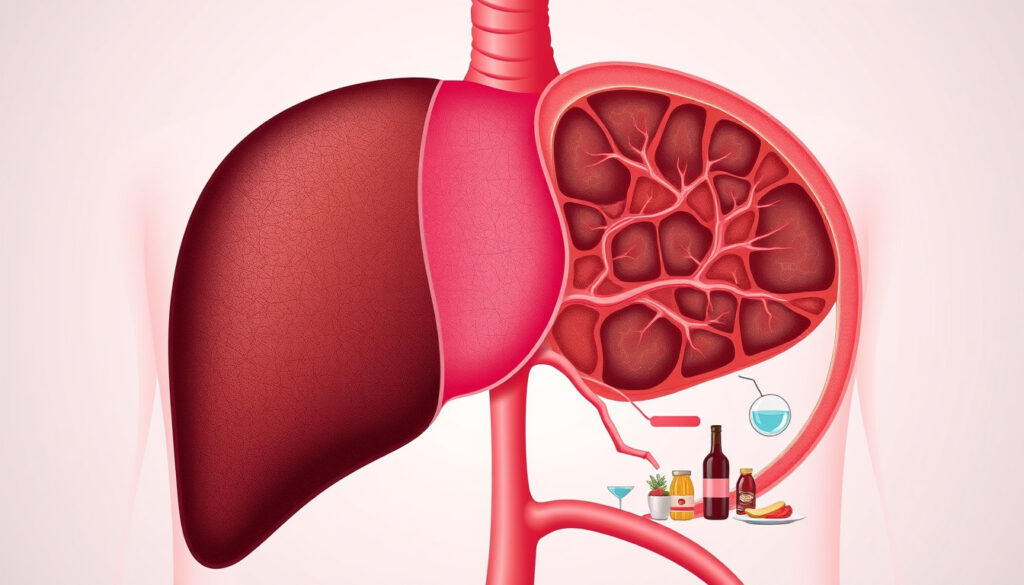
What Does the Liver Do? Functions and Damage Signs
You’ve probably heard that your liver is important, but the scale of its workload might surprise you. This fist-sized organ, tucked under your rib cage on the right side, handles more than 500 distinct jobs — from filtering waste out of your blood to helping you digest a fatty meal. Understanding what the liver does is the first step toward recognizing when something goes wrong.
Functions: More than 500 ·
Blood filtered daily: Over 250 gallons ·
Weight: About 3 pounds (1.4 kg) ·
Regeneration: Can regrow after partial removal ·
Location: Upper right abdomen
Quick snapshot
- Filters blood from the digestive tract (Johns Hopkins Medicine)
- Produces bile for fat digestion (Medical News Today)
- Stores vitamins A, D, E, K, and B12 (British Liver Trust)
- Regulates blood clotting (Cleveland Clinic)
- Jaundice (yellow skin/eyes) from bilirubin buildup (Medical News Today)
- Dark brown or tea-colored urine (Cleveland Clinic)
- Chronic fatigue and nausea (Cleveland Clinic)
- Abdominal swelling (ascites) (Cleveland Clinic)
- Exact list of all 500+ functions varies by source
- Efficacy of “liver cleanse” drinks beyond hydration is not proven
- Precise timing of early symptoms in different diseases is unpredictable
- Dark brown or tea-colored urine as a definitive indicator of liver disease is not always confirmable without further tests
- See a doctor if you notice jaundice, dark urine, or persistent fatigue
- Blood tests (ALT, AST, bilirubin) can assess liver function
- Healthy diet and limiting alcohol reduce liver disease risk
Six key facts about the liver, one pattern: every system in the body depends on it.
| Fact | Detail |
|---|---|
| Primary job | Filters blood and processes nutrients (Johns Hopkins Medicine) |
| Location | Upper right abdomen, behind ribs (Columbia Surgery) |
| Weight | ~3 pounds (1.4 kg) (Medical News Today) |
| Blood flow | 1.5 liters per minute (25% of cardiac output) (Johns Hopkins Medicine) |
| Regeneration | Can regrow to full size within months after partial removal (British Liver Trust) |
| Vital importance | Cannot live without a functioning liver (Cleveland Clinic) |
What does the liver do?
The liver is the body’s chemical processing plant. Without it, you wouldn’t be able to digest fats, store energy, or clear toxins from your bloodstream.
Filtering blood and removing toxins
- Every minute, the liver filters about 1.5 liters of blood — roughly 25% of the heart’s output (Johns Hopkins Medicine).
- It converts poisonous ammonia into urea, which is excreted in urine (Johns Hopkins Medicine).
- Drugs, alcohol, and other chemicals are broken down here before they reach the rest of the body (Johns Hopkins Medicine).
Producing bile for digestion
- Bile is a greenish fluid that emulsifies fats so they can be absorbed in the small intestine.
- The liver produces about 500–600 mL of bile each day (Columbia Surgery).
- Bile also carries away waste products like bilirubin (Medical News Today).
Processing nutrients from food
- After a meal, the liver converts glucose into glycogen for short-term energy storage (Johns Hopkins Medicine).
- It stores fat-soluble vitamins (A, D, E, K) and releases them when the body needs them (British Liver Trust).
- Amino acids are regulated in the blood to maintain protein balance (Johns Hopkins Medicine).
Regulating blood clotting factors
- The liver produces most of the proteins needed for blood coagulation (Johns Hopkins Medicine).
- Without these clotting factors, even a small cut could cause dangerous bleeding.
Storing vitamins and minerals
- The liver holds iron from hemoglobin processing and releases it as needed (Johns Hopkins Medicine).
- Vitamin B12 reserves can last for years thanks to liver storage.
“The liver is the body’s workhorse, performing over 500 vital functions — from filtering blood to producing bile.”
— Hepatologist, Johns Hopkins Medicine
The implication: any disruption in liver function cascades through multiple body systems simultaneously.
What are the first signs of a bad liver?
Fatigue and weakness
- Unexplained tiredness is often the earliest complaint (Cleveland Clinic).
- When the liver struggles, toxin buildup can drain energy.
Jaundice (yellowing of skin and eyes)
- Bilirubin accumulates in the blood when the damaged liver can’t process it efficiently (Medical News Today).
- Yellow skin or eyes are a classic, often late, sign.
Dark urine and pale stool
- Dark brown or tea-colored urine signals excess bilirubin being excreted through the kidneys (Cleveland Clinic).
- Stool becomes pale because bile isn’t reaching the intestines.
Abdominal swelling (ascites)
- Fluid buildup in the abdomen is a sign of advanced liver disease (Cleveland Clinic).
- It often accompanies leg swelling and musty-smelling breath.
Nausea or loss of appetite
- Digestion suffers when bile production drops, leading to queasiness.
- Persistent loss of appetite can be an early red flag.
“Jaundice occurs when bilirubin builds up because the damaged liver cannot process it efficiently.”
— Medical News Today, reporting on liver disease symptoms
The pattern: the earlier the symptom appears, the more subtle it is — proactive screening matters.
Can a human survive without a liver?
Why the liver is essential for life
- Without a liver, toxins build up in the blood within hours, leading to coma and death (Cleveland Clinic).
- No other organ can take over its role in metabolism, detoxification, and clotting factor production.
Liver transplant as the only replacement option
- A liver transplant is the only treatment for end-stage liver failure.
- Living donors can donate a portion of their liver, which regenerates in both donor and recipient.
What happens during liver failure
- Acute liver failure can occur within days, causing confusion, bleeding, and organ failure.
- Without transplant, mortality is very high.
Liver regeneration capability
- The liver can regrow up to 70% of its mass after partial removal, often within a few months (British Liver Trust).
- But complete removal is not survivable — regeneration requires existing healthy tissue.
No human has ever survived without a liver. If yours fails completely, a transplant is the only lifeline.
The catch: regeneration is a double-edged sword — it can mask disease progression until damage is severe.
What drink cleans the liver?
Water as the primary liver flush
- The liver needs adequate water to produce bile and flush waste. Dehydration strains both liver and kidneys.
Green tea and its antioxidant properties
- Catechins in green tea may reduce oxidative stress on the liver, but evidence is preliminary.
Coffee’s association with lower liver enzymes
- Studies link regular coffee consumption to lower risk of liver fibrosis and cirrhosis (British Liver Trust).
- Coffee is not a treatment, but it may support liver health when part of a balanced diet.
Beetroot juice and liver function
- Beetroot is rich in antioxidants, but claims that it “flushes” the liver are overstated.
Lemon water and its mild detox effect
- Lemon water provides vitamin C and hydration, but the liver cleans itself — no drink does the job for it.
The implication: marketing claims about “detox” often ignore the liver’s built-in cleaning system.
What color is pee when the liver is failing?
Dark brown or amber urine as a sign
- Dark brown urine, often described as tea- or cola-colored, indicates elevated bilirubin (Cleveland Clinic).
Tea-colored urine and bilirubin
- Bilirubin is normally processed by the liver; when the liver is damaged, it spills into the blood and is filtered by the kidneys.
Distinguishing from dehydration
- Dehydration produces dark yellow urine, not brown. If rehydrating doesn’t lighten the color, liver issues may be the cause.
When to see a doctor
- Any persistent dark urine, especially with pale stool or yellowing skin, requires immediate medical evaluation.
The catch: color alone isn’t diagnostic — combine with other symptoms and blood work.
What does the liver do vs kidney?
Liver: filtering blood, metabolism, bile production
- The liver processes drugs, alcohol, fats, and proteins. It produces bile and stores energy (Johns Hopkins Medicine).
Kidneys: filtering blood, urine production, electrolyte balance
- Kidneys filter waste products like urea and regulate sodium, potassium, and acid-base balance (Medical News Today).
Shared tasks: waste removal and blood pressure regulation
- Both organs remove waste from the blood, but the liver targets toxins and the kidneys target urine solutes.
- Both help regulate blood pressure, though through different mechanisms.
Key differences in primary functions
- The liver can regenerate; kidneys cannot.
- The liver produces bile; kidneys produce urine.
- Kidneys produce erythropoietin (EPO) for red blood cell production; the liver does not.
Confusing liver and kidney function leads to misunderstanding lab results. Elevated liver enzymes (ALT/AST) point to the liver; elevated creatinine points to the kidneys. Knowing the difference helps you read your blood work correctly.
The pattern: both organs filter, but their outputs and regenerative capacities are fundamentally different.
Confirmed facts vs what remains unclear
Confirmed facts
- Liver performs over 500 functions including bile production, blood filtration, and nutrient processing (Johns Hopkins Medicine).
- Early signs of liver damage include jaundice, dark urine, fatigue, and abdominal swelling (Cleveland Clinic).
- A human cannot survive without a liver; transplant is the only option (Cleveland Clinic).
What’s unclear
- Efficacy of specific “liver cleanse” drinks beyond hydration and antioxidant benefits.
- Precise timing of early symptom appearance in different liver diseases.
- Complete list of all 500+ functions — sources catalog them differently.
- Dark brown or tea-colored urine as a definitive indicator of liver disease is not always confirmable without further tests.
The implication: While much is known, some claims require more evidence — especially around early detection and “cleanses.”
Quotes from experts
“The liver converts poisonous ammonia into urea, which is excreted in urine.”
— Researcher, Johns Hopkins Medicine
For more information on liver health, check out this Crock pot pot roast recipe.
“The liver filters more than 250 gallons of blood every day.”
— Cleveland Clinic, hepatology division
“The liver has a remarkable ability to regenerate itself, even after significant tissue loss.”
— British Liver Trust, health information team
Summary
Your liver is the unsung workhorse of your body, running over 500 processes every single day. For anyone concerned about liver health, the choice is clear: pay attention to early signs like jaundice and dark urine, avoid relying on unproven “cleanses,” and see a doctor promptly if symptoms appear. A healthy liver can regenerate, but a failing one cannot wait.
Also, check out our guide on Canker Sore vs Oral Cancer: How to Tell the Difference for another health comparison, and learn about Fresh Pet Dog Food: Reviews, Vet Advice & Buying Guide for pet wellness.
Understanding what the liver does is essential, but knowing its livers location and pain signs can help you identify early warning signs of trouble.
Frequently asked questions
What does the liver do for blood?
It filters out toxins, processes nutrients, and removes bacteria from the bloodstream. It also produces proteins that help blood clot.
What are 5 signs of an overworked liver?
Chronic fatigue, dark urine, pale stools, jaundice, and abdominal swelling. These can appear gradually.
What is the quickest way to repair your liver?
Stop drinking alcohol, eat a balanced diet, stay hydrated, and consult a doctor. The liver repairs itself naturally over time.
What side is your liver on?
It is located in the upper right side of the abdomen, just below the rib cage.
What does the liver do for alcohol?
It breaks down alcohol into less harmful substances through enzymes like alcohol dehydrogenase. Excessive alcohol can damage liver cells.
What does the liver do short answer?
It filters blood, produces bile, stores nutrients, and detoxifies harmful substances — over 500 jobs in total.
What does the liver do for kids?
The same as for adults: it helps digest food, stores energy, and cleans the blood. A healthy liver is essential for growth and development.
How does the liver differ from the kidney?
The liver processes fats, drugs, and toxins; produces bile; and stores vitamins. The kidneys filter urea, balance electrolytes, and produce urine. Both remove waste but handle different substances.
More related posts
 Sex on the Beach Drink – Classic Recipe, History & Guide
 What Is Imposter Syndrome – Symptoms, Causes & How to Overcome It
 America Ferrera Movies and TV Shows – Complete Filmography Guide
 Who Is Natalia Grace? Age Controversy and Where She Now
 Graco SlimFit 3-in-1 Car Seat: SlimFit vs SlimFit LX – Specs, FAA Approval & More
 When Will Wicked 2 Come Out? Wicked: For Good Releases Nov 21
 Rangers vs Red Sox: Head-to-Head, History, and Fan Guide
 Miami Heat vs 76ers Match Player Stats (Nov 23 & Feb 26)