Symptoms of High Blood Pressure: Warning Signs & How to Lower It
You wouldn’t know you had it unless you checked. That’s the unsettling reality about high blood pressure — a condition that affects more than 1.28 billion adults worldwide, yet roughly 46% of those people have no idea they’re living with it.
Adults with hypertension worldwide: 1.28 billion ·
Percentage unaware of their condition: 46% ·
Normal blood pressure target: Below 120/80 mmHg ·
Leading risk factor for premature death: Hypertension ·
Population affected in the U.S.: Nearly half of adults
Quick snapshot
- No symptoms in most cases (American Heart Association)
- Often called the silent killer (Cleveland Clinic)
- Routine check-ups are the only way to detect it early (European Heart Journal / ESC Guidelines 2024)
- Severe headache in hypertensive crisis (Mayo Clinic)
- Shortness of breath (American Heart Association) (Mayo Clinic)
- Reduce sodium intake (NIH / DASH Diet)
- Regular doctor visits for follow-up (European Heart Journal / ESC Guidelines 2024)
The following data underscores the urgency of hypertension awareness.
| Key fact | Value |
|---|---|
| Prevalence | 1 in 3 adults globally have hypertension (American Heart Association) |
| Normal BP | Below 120/80 mmHg (AHA/ACC Guideline 2017) |
| Hypertensive Crisis | 180/120 mmHg or higher (Mayo Clinic) |
| Uncontrolled Cases | Only 1 in 4 adults with hypertension have it under control (Cleveland Clinic) |
What are the warning signs of high blood pressure?
Common symptoms in hypertensive crisis
- Shortness of breath (American Heart Association)
- Chest pain (American Heart Association)
- Blurred or double vision (Mayo Clinic)
- Severe headache (Mayo Clinic)
- Nausea or vomiting (Mayo Clinic)
- Confusion or difficulty speaking (American Heart Association)
Why early stages have no symptoms
For most people, hypertension is a condition with no signs or symptoms — none at all (American Heart Association). This is why it’s known as the silent killer. The reason is simple: the body adapts slowly to elevated pressure inside blood vessels, so there is no pain, no change, and no signal — only silent damage.
What to do if you notice warning signs
- Check your blood pressure immediately with a home monitor (European Heart Journal / ESC Guidelines 2024)
- If reading is 180/120 mmHg or higher, seek emergency care (Mayo Clinic)
- If reading is above 160/100 mmHg but below crisis level, schedule a follow-up within 24 hours (European Heart Journal / ESC Guidelines 2024)
Most people with high blood pressure feel completely fine — until the day they don’t. The key insight: a normal feeling is not a guarantee of normal pressure.
The implication: waiting for symptoms means waiting until the damage is already underway. The only reliable detection strategy is regular screening.
How do you feel when you have high blood pressure?
The typical asymptomatic phase
- No symptoms in most cases (American Heart Association)
- Often called the silent killer (Cleveland Clinic)
- Worldwide, 46% of adults with hypertension are unaware they have it (Cleveland Clinic citing WHO)
Symptoms of very high blood pressure
Rarely, an individual with very high blood pressure may experience symptoms like shortness of breath, blurry vision, or headache (Mayo Clinic). In a hypertensive crisis — defined as 180/120 mmHg or higher — additional symptoms such as chest pain, confusion, nausea, and seizures can occur (Mayo Clinic).
When to seek emergency care
- Blood pressure at or above 180/120 mmHg (Mayo Clinic)
- Chest pain or difficulty breathing (American Heart Association)
- Vision changes, difficulty speaking, or weakness on one side of the body (American Heart Association)
When a person finally feels their high blood pressure, it is often because it has reached a dangerous level — one that requires immediate medical attention, not a routine check-up.
The pattern: the body’s first complaint during a hypertensive crisis is often a signal of organ damage — the very outcome screening aims to prevent.
How to lower high blood pressure?
Lifestyle changes that work
- Follow the DASH diet (Dietary Approaches to Stop Hypertension) which emphasizes fruits, vegetables, and low-fat dairy while reducing sodium (NIH)
- Reduce sodium intake to under 2,300 mg per day, and ideally under 1,500 mg for greater effect (American Heart Association)
- Aim for at least 150 minutes of moderate aerobic activity per week (AHA/ACC Guideline 2017)
Medication options
When lifestyle changes are insufficient, physicians typically prescribe one or more of the following: ACE inhibitors, angiotensin II receptor blockers (ARBs), diuretics, beta-blockers, or calcium channel blockers (European Heart Journal / ESC Guidelines 2024). The choice depends on the patient’s age, race, and coexisting conditions like diabetes or kidney disease.
Home monitoring and tracking
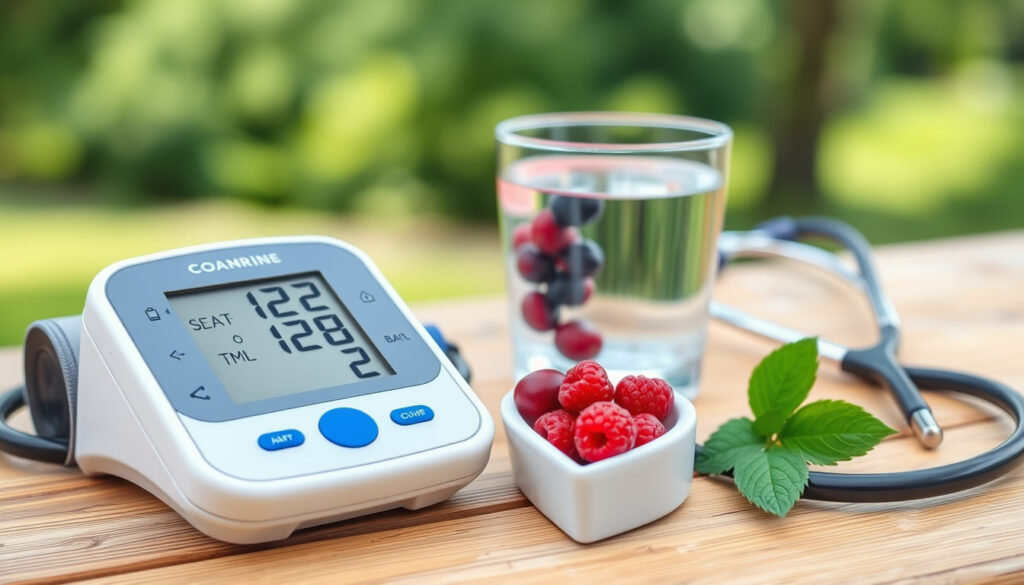
- Use a validated home blood pressure monitor with an appropriately sized cuff (AHA/ACC Guideline 2017)
- An average home blood pressure of 135/85 mmHg or higher is considered hypertensive in the 2024 ESC guideline (European Heart Journal / ESC Guidelines 2024)
Lifestyle changes can lower blood pressure by 5–15 mmHg in some cases, but for many patients, medication is still needed to reach target. The trade-off: daily pills versus long-term organ damage.
The implication: lifestyle changes are powerful, but they are a supplement, not a replacement, for medical treatment in most cases of established hypertension.
What to drink to lower blood pressure?
Hydration and water intake
Drinking water may temporarily help if you are dehydrated, but does not consistently lower blood pressure on its own (Cleveland Clinic). Chronic dehydration is not a major cause of hypertension, and simply adding water is not an effective strategy.
Beetroot juice and its benefits
Beetroot juice contains dietary nitrates that convert to nitric oxide in the body, helping to dilate blood vessels and modestly reduce blood pressure (American Heart Association). Several studies suggest a reduction of 5–10 mmHg systolic within hours of consumption, making it one of the more potent dietary interventions.
Herbal teas and other beverages
Research on specific beverages is limited. What you avoid drinking (excess alcohol) matters more than what you add. Beetroot juice offers a small, useful edge, but no beverage replaces a comprehensive lifestyle strategy.
The pattern: what you avoid drinking (excess alcohol) matters more than what you add. Beetroot juice offers a small, useful edge, but no beverage replaces a comprehensive lifestyle strategy.
What are the four signs your heart is quietly failing?
Connection between high blood pressure and heart failure
High blood pressure is a major risk factor for heart failure (American Heart Association). Over years, the heart must pump against higher resistance, causing the left ventricle to thicken and eventually weaken. Similarly, the liver can be affected by chronic conditions; for more on liver health, see our article on What Does the Liver Do? Functions and Damage Signs.
Recognizing early heart failure symptoms
- Shortness of breath during daily activities or when lying flat (Mayo Clinic)
- Swelling in the legs, ankles, or feet (edema) (American Heart Association)
- Persistent fatigue or weakness (American Heart Association)
- Rapid or irregular heartbeat (American Heart Association)
When to contact a doctor
Heart failure develops gradually, and early detection dramatically improves outcomes (American Heart Association). If you experience any combination of the above symptoms, especially with a history of high blood pressure, consult your physician promptly.
The pattern: high blood pressure does not hurt — your heart’s struggle is the first sound the body makes. By the time you hear it, the condition may already be advanced.
Confirmed facts and what remains unclear
Confirmed facts
- High blood pressure often has no symptoms until it becomes severe or a hypertensive emergency (American Heart Association)
- Lifestyle modifications like diet and exercise can lower blood pressure (AHA/ACC Guideline 2017)
- Certain drinks like beetroot juice may help reduce blood pressure modestly (American Heart Association)
- Home blood pressure monitoring provides a better picture than occasional office readings (European Heart Journal / ESC Guidelines 2024)
What’s unclear
- The exact threshold at which symptoms first appear varies widely among individuals
- Whether drinking water alone significantly lowers blood pressure is not well supported by evidence (Cleveland Clinic)
- The long-term relationship between chronic stress and sustained hypertension is less clear
- The effectiveness of herbal teas like hibiscus is not well-established
“High blood pressure (hypertension) does not usually have any symptoms.”
— HSE Ireland (Ireland’s national health service)
“Rarely, an individual with very high blood pressure may have symptoms such as shortness of breath, blurry vision or headache.”
— Mayo Clinic (U.S. academic medical center)
“High blood pressure can cause complications like loss of vision and sexual dysfunction.”
— British Heart Foundation (UK cardiovascular charity)
The human cost of hypertension is quiet but immense. For the nearly 1 in 3 adults worldwide living with it, the choice is clear: monitor regularly, or risk discovering the consequences too late.
Related reading: Symptoms and Duration of BA 3.2 Cicada · What Does the Liver Do? Functions and Damage Signs
houstondiabetesinstitute.org, ncoa.org, hindustantimes.com, houstonheartcenter.com, int.livhospital.com, ncbi.nlm.nih.gov
Frequently asked questions
What is normal blood pressure by age?
Normal blood pressure for adults of any age is generally below 120/80 mmHg, according to the American Heart Association. For children and adolescents, normal ranges vary by age, sex, and height percentile, and should be interpreted by a pediatrician.
What causes high blood pressure in women?
Risk factors for high blood pressure in women are similar to men — age, family history, obesity, and diet — but women face additional risks from pregnancy, menopause, and certain oral contraceptives. The NHS notes that women over 65 are more likely to develop hypertension than men of the same age.
Can stress cause high blood pressure?
Acute stress can temporarily raise blood pressure. However, the long-term relationship between chronic stress and sustained hypertension is less clear. The AHA notes that stress-related behaviors like poor diet, drinking, and inactivity may contribute more than the stress itself.
Is high blood pressure hereditary?
Yes, genetics play a role. The Cleveland Clinic states that high blood pressure tends to run in families, particularly among African Americans, who develop it at earlier ages and with greater severity.
How often should I check my blood pressure?
For adults with normal readings (below 120/80 mmHg), annual checks are recommended. For those with stage 1 hypertension or risk factors, the AHA suggests more frequent monitoring at home — at least weekly, and daily during medication adjustments.
Can high blood pressure be reversed?
In some cases, lifestyle changes can bring blood pressure back to normal without medication — particularly in those with prehypertension or mild hypertension. However, for most, management rather than complete reversal is the realistic goal. The 2024 ESC guideline emphasizes that even slight reductions reduce cardiovascular risk.
What is the DASH diet?
The DASH (Dietary Approaches to Stop Hypertension) diet is an eating plan rich in fruits, vegetables, whole grains, lean proteins, and low-fat dairy, while limiting salt, red meat, and added sugars. Developed by the NIH, it has repeatedly been shown to lower blood pressure within weeks.
Does exercise immediately lower blood pressure?
After a single bout of aerobic exercise, blood pressure can drop by 5–7 mmHg for up to 24 hours — a phenomenon called post-exercise hypotension. Regular exercise compounds this effect over time, according to the AHA. Even brisk walking for 30 minutes provides measurable benefits.
More related posts
 Bad Credit Credit Cards – Top Picks to Rebuild Credit
 How Much Does a Cloud Weigh? 500,000 kg & 100 Elephants
 Current Movies in Theaters: Best Films to Watch Now
 Gibson Serial Number Lookup: How to Check & Decode Any Gibson
 When Does Love Island USA Start 2025? Premiere & How to Watch
 Due Process Explained: Definition, Rights, and Examples in Law
 Daniel Craig Bond Movies: Full List, Rankings & Where to Watch
 The Chosen Season 1: Watch, Controversy & Accuracy